About
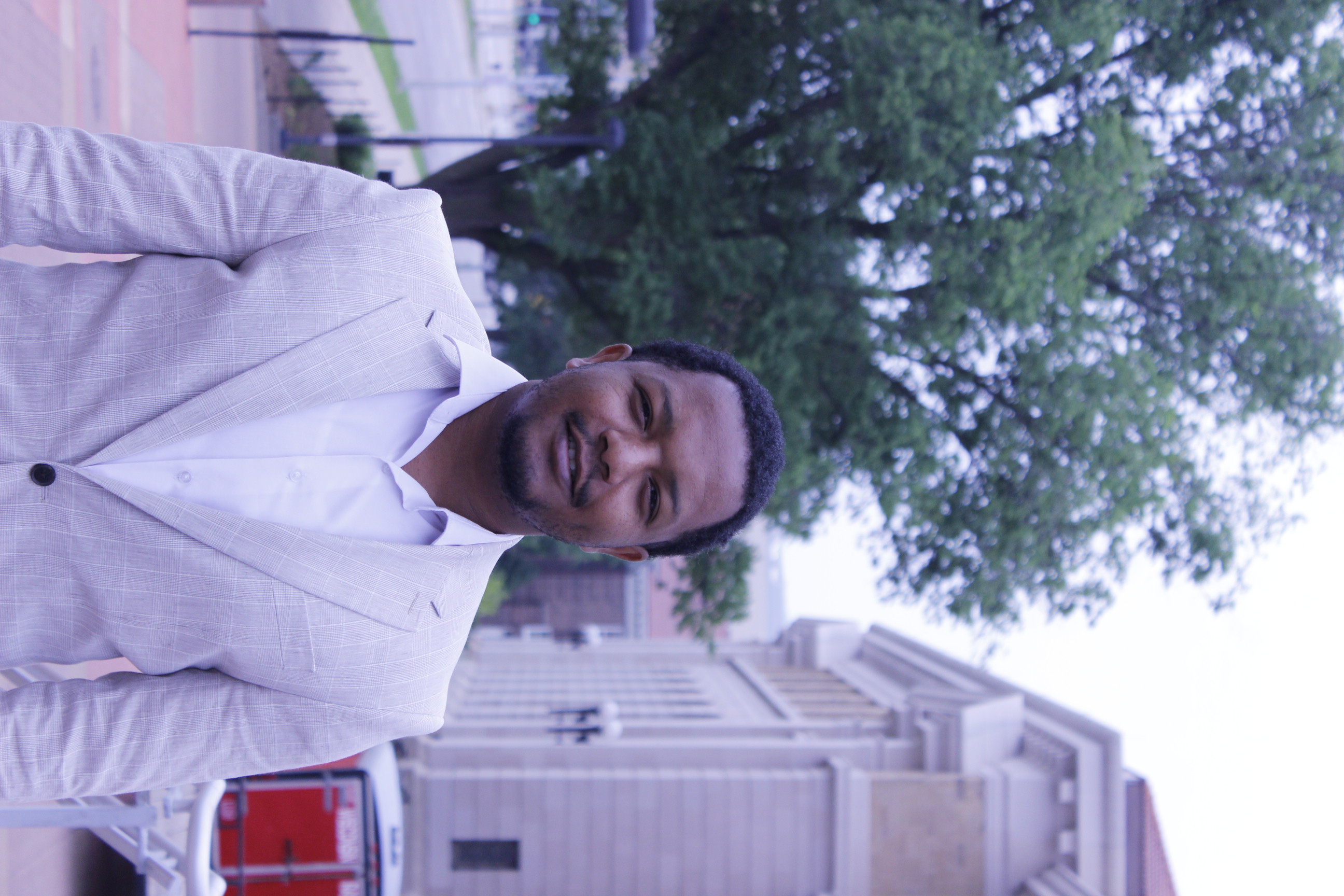
About Oliyad Dibisa
Experimental Polymer Scientist | Characterization · Formulation · Processing
Research Focus
I’m a PhD candidate in Mechanical Engineering at the University of Wisconsin–Madison. My expertise is in polymer characterization and the formulation of UV-curable biopolymers and emulsions. I focus on establishing structure-process-property relationships to translate experimental insights into scalable, high-performance products.
Core Areas:
- Polymer Characterization: Using rheometry and NMR spectroscopy (DOSY, relaxometry) to establish structure-property relationships
- UV-Curable Formulations: Developing photopolymerization-based processes for natural rubber latex (achieving 900%+ elongation)
- Emulsion & Latex Processing: Formulating ammonia-free adhesives and eco-friendly latex systems
- Process Scale-Up: Applying rheological models and process simulation to optimize manufacturing
Education
Ph.D. in Mechanical Engineering (August 2021 – May 2026)
University of Wisconsin–Madison
Advisors: Prof. Tim A. Osswald and Prof. Xiao Kuang
Research: Structure–Property Relationships in Natural Rubber Latex (NRL) for Photolatex and Adhesives
M.S. in Mechanical Engineering (August 2022)
University of Wisconsin–Madison
B.S. in Chemistry (June 2021)
Pacific Union College, Angwin, CA
What I’m Looking For
I’m seeking R&D positions where I can apply polymer characterization and formulation expertise to solve real-world manufacturing challenges. I’m particularly interested in:
- Experimental materials R&D (polymers, coatings, adhesives, emulsions)
- UV-curable and latex formulation development
- Process engineering and scale-up
- Structure-process-property relationship studies
Awards & Honors
🏆 Research Awards
Recognized for research on latex viscosity prediction (DOI: 10.1063/5.0255679) and 3D printing NRL (DOI: 10.1002/pls2.70011)
View Award Details →
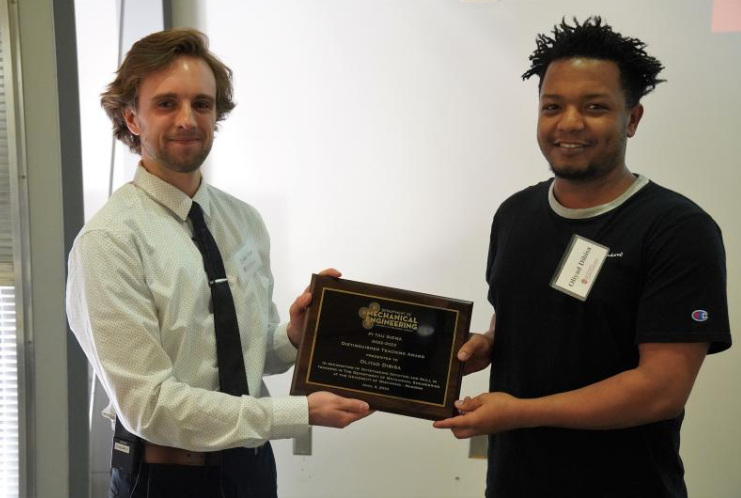
🎓 Teaching Awards
View Announcement →
Beyond the Lab
When I’m not in the lab, you’ll find me on the soccer field, behind a camera, or thinking about where materials R&D is heading next.
Since You Visited me, Learn About Rubbers!
Why do rubbers snap back? Unlike metals, rubber elasticity comes from entropy, not energy. Stretched chains lose randomness (↓ entropy) and want to recoil. At very high strains, chains align and crystallize — that's strain-induced crystallization, causing the stress upturn you'll see in the curve!